Publications
2025
Ratsimbazafindranahaka, M. N., Huetz, C., Saloma, A., Andrianarimisa, A., Charrier, I. & Adam, O. (2025). A Descriptive Breakdown of Pre- and Post-Nursing Behavioral Sequences in Humpback Whale Mother-Calf Pairs on a Calving Ground. Marine Mammal Science, e70084.
Abstract. Advancements in animal-borne tag technology, especially the introduction of camera-equipped tags, have revolutionized the study of nursing behaviors in free-ranging whales. However, currently available descriptions mainly focus on the calf. Moreover, the behavioral sequence preceding and following nursing has received little attention. This note explores the behaviors exhibited by humpback whale mothers and calves before, during, and after nursing bouts using a unique dataset from simultaneous Acousonde tag deployments on humpback whale mother-calf pairs on their calving ground. Acousonde tags lack cameras, but nursing events have been successfully identified thanks to a recent automatic identification method relying on kinematic signatures. Our analysis focused on depth, vertical speed, pitch, roll, relative speed, and overall dynamic body acceleration. The nursing process involved a vertical reunion/separation pattern. The data suggest that calves play an active role in the reunion and the nursing setup, with mothers displaying high levels of cooperation to facilitate suckling, such as posture changes and a reduction in tail beats. These findings offer valuable insights into mother-young interactions in humpback whales.
Famintinana. Ny fandrosoan’ny fitaovana fandraketana apetaka amin’ny biby, indrindra ny fahatongavan’ireo fitaovana misy fakana horonan-tsary, dia nanova tanteraka ny fandalinana ny fomba fampinonoan’ny trozona dia. Na dia teo aza izany, ny fahalalana nisy hatreto dia mbola nifantoka kokoa tamin’ny zavatra ataon’ny zanatrozona rehefa minono ihany. Ankoatra izay, tsy dia voadinika firy ny zavatra ataon’ireo trozona mialoha sy aorian’ny fampinonoana. Ity taratasy fanamarihana ity dia mamelabelatra ny zavatra ataon’ny renitrozona be trafo miaraka amin’ny ny zanany mialoha, mandritra, ary aorian’ny fampinonoana, amin’ny alalan’ny fampiasana angon-drakitra miavaka azo avy tamin’ny fametrahana fitaovana fandraketana apetaka “Acousonde” miaraka eo amin’ny reniny sy zanany tao amina toerana fiterahan’izy ireo. Tsy misy fakana horonan-tsary moa ny “Acousonde”, saingy voajery soa aman-tsara ireo fotoana fampinonoana noho ny fomba famantarana mandeha ho azy vao nokarohina vao haingana izay miantehitra amin’ny mari-fihetsika isan-karazany mampiavaka ny fampinonoana. Nifantoka tamin’ny halalina, hafaingan’ny fidinana na fiakarana, vehina, vena, hafainganam-pandeha, ary haingam-panetsehana ankapoben’ny vatana ny famakafakana. Araka ny famakafakana dia ahitana fotoana fisarahana (ny andaniny eny ambony ary ny ankilany mijanona ambany rano) sy fifanantonana ny dingan’ny fampinonoana. Hita fa mandray anjara mavitrika amin’ny fifanantonana sy ny fanomanana ny finonoana ny zanatrozona, ary ny reniny kosa mampiseho fihetsika hanamorana ny finonoan’ilay zanatrozona, toy ny fanovana ny fomba “fijoro” sy ny fanalefahana ny fihetsiky ny rambo. Inoana fa mitondra fahalalana vaovao mahakasika ny fifandraisan’ny renitrozona sy ny zanany ireo valim-pikarohana ireo.
Ratsimbazafindranahaka, M. N.*, Adam, O.*, Huetz, C., Reidenberg J. S., Saloma, A., Andrianarimisa, A., & Charrier, I. (2025). Behavioral data suggest adaptive buoyancy control during shallow dives in humpback whales. Journal of Experimental Biology, 228 (8): jeb249936. (* Co-first authors)
Abstract. Marine mammals have been proposed to have a passively changing buoyancy that influences their swimming efforts depending on the depth, as a result of pulmonary alveolar compression/expansion as ambient pressure changes. Mysticetes have been described to have the same passive mechanism without considering their unique respiratory system, which may provide them with the ability to change their buoyancy actively to enhance vertical movements. Here, we present behavioral evidence supporting that adult mysticetes actively change buoyancy during shallow dives by analyzing diving data from multi-sensor tags placed on humpback whale mother–calf pairs. We show that adult female humpback whales display low effort to swim downward and upward regardless of the depth and can stay perfectly static (stationary) at different depths. In contrast, calves display depth-dependent swimming effort and only remain stationary with external help or at a specific depth. Our study adds to the body of evidence regarding the unique features of mysticetes’ dives.
Famintinana. Raha ny tolo-kevitra hatrizay dia nolazaina fa ny fitsingevan’ny biby mampinono an-dranomasina dia miovaova ho azy araka ny halalina misy azy ary misy fiantraikany amin’ny ezaka filomanosany izany. Izany dia vokatry ny fifintinana/fivelaran’ny alveola ao amin’ny avokavoka rehefa miova ny tsindry manodidina ataon’ny rano. Voalaza fa fiovana tsy an-tsitrapo mitovy amin’izany koa ny an’ny trozona tsy misy nify saingy adino matetika fa miavaka raha samy biby ny taovam-pisefoany ary azo eritreretina fa mety hanome azy ireo fahafahana manova an-tsitrapo ny fitsingevany mba hanampy amin’ny fiakarana sy fidinana anaty rano izany. Eto, manolotra porofo miainga amin’ny fandinihana ny fihetsika izahay manohana fa manova an-tsitrapo ny fitsingevany tokoa ny trozona tsy misy nify efa lehibe mandritra ny filomanosana tsy dia lalina, amin’ny alalan’ny famakafakana angon-drakitra momba ny filomanosana azo avy tamina fitaovana misy singa fandraketana maro napetaka tamin’ny renitrozona be trafo sy ny zanany. Asehonay fa kely tokoa ny ezaka filomanosana ataon’ny trozona be trafo vavy efa lehibe na rehefa midina na rehefa miakatra na aiza na aiza halalina misy azy ary afaka mijanona tsara tsy mihetsika amin’ny halalina samihafa izy ireo. Mifanohitra amin’izany kosa, ny zanatrozona dia mampiseho ezaka filomanosana miankina amin’ny halalina ary tsy mahavita mijanona tsy mihetsika ambany rano raha tsy misy fanampiana ivelany na amina halalina voafaritra. Ity fikarohana nataonay ity dia manampy ny raki-porofo momba ny toetra miavaka ananan’ny fomba filomanosan’ny trozona tsy misy nify any ambany rano.
2024
Ratsimbazafindranahaka, M. N., Huetz, C., Saloma, A., Andrianarimisa, A., Adam, O., & Charrier, I. (2024). Behavioural context of call production in humpback whale calves: identification of potential begging calls in a mysticetes species. Proceedings of the Royal Society B, 291, 20242048.
Abstract. Baleen whale calves vocalize, but the behavioural context and role of their social calls in mother–calf interactions are yet to be documented further. We investigated the context of call production in humpback whale (Megaptera novaeangliae) calves using camera-equipped animal-borne multi-sensor tags. Behavioural states, including suckling sessions, were identified using accelerometer, depth and video data. Call types were categorized through clustering techniques. We found that call types and rates predict the occurrence of a given state. Milling, resting and travelling were associated with a median call rate of 0 calls min−1, while surface play, tagging responses and suckling were associated with higher call rates, averaging up to a median of 0.5 calls min−1 for suckling. Suckling sessions were mainly associated with two sets of low-frequency calls corresponding to previously described burping, barking and snorting sounds. Surface play sessions featured mid-frequency calls with whoop-like sounds and other call types. These results address the significance of vocal signalling in mother–calf communication and the calf’s development, including the first identification of potential begging calls. Overall, this study offers new insights into baleen whale behaviour, underscores the importance of social calls in mother–calf interactions and enhances our understanding of communication systems in aquatic mammalian mother–young pairs.
Famintinana. Mampiasa feo ny zanatrozona tsy misy nify, saingy anatin’ny fifandraisan’ny reniny sy ny zanany dia mbola tsy fantatra mazava ny hoe rehefa toe-javatra toy ny ahoana izy ireo no mampiasa hiaka ara-tsosialy ary inona ny tena anjara asan’izany. Entoana izahay dia nandinika izay lafiny hoe toe-javatra toy ny ahoana no mampiasa hiaka ny zanatrozona be trafo (Megaptera novaeangliae) tamin’ny alalan’ny fampiasana fitaovana fandraketana apetaka izay misy fakana horonan-tsary sy singa fandraketana maro hafa. Nofantarina niainga tamin’ny ireo angon-drakitra avy tamin’ny fandrefesana fanafainganana, fandrefesana halalina ary fakana horonan-tsary ny zavatra nataon’ny zanatrozona, ka anisan’izany ny finonoana. Nosokajiana tamin’ny alalan’ny teknika fampivondronana mandeha ho azy kosa ireo hiaka. Hita fa ny karazana hiaka nampiasain’ireo zanatrozona sy ny tahan’ny fampiasana izany dia ahafahana maminavina sy mamantatra ny zavatra ataony. Rehefa mirenireny, maka aina sy mandeha izy ireo dia 0 hiaka/minitra ny salan’isan’ny tahan’ny fampiasana hiaka. Rehefa milalao eny ambonin’ny rano, aorian’ny fametahana ny fitaovana fandraketana, ary rehefa minono kosa dia ambony kokoa tahan’ny hiaka, izay nahatratra salan’isa 0,5 hiaka/minitra rehefa minono. Ny finonoana dia niaraka indrindra tamin’ny karazana hiaka feo ambany karazany roa, izay mifanandrify amin’ireo feo efa voafaritra tamin’ny fikarohana teo aloha, manahaka feon-drezatra, fivovozana ary feon-kisoa. Ny fotoana filalaovana teny ambony rano kosa matetika dia niaraka tamin’ny feo antonony, toy ny hoe “oop” sy karazana hiaka hafa. Manampy amin’ny fahazoana ny asan’ny feo amin’ny fifandraisan’ny reniny sy ny zanany ary amin’ny fivoaran’ilay zazany ireo voka-pikarohana ireo, ka anisan’izany ny fahalalana voalohany ireo antso mety ho fangatahana nono ataon ‘ny zanatrozona. Amin’ny ankapobeny, ity fikarohana ity dia manome fomba fijery vaovao momba ny fihetsiky ny trozona tsy misy nify, manasongadina ny maha-zava-dehibe ny hiaka ara-tsosialy amin’ny fifandraisan’ny reniny sy ny zanany, ary manampy ny fahatakarana ny rafitra fifandraisana eo amin’ny reniny sy ny zanany amin’ireo biby mampinono an-drano amin’ny ankapobeny.
Ratsimbazafindranahaka, M. N., Huetz, C., Saloma, A., Andrianarimisa, A., Charrier, I., & Adam, O. (2024). Time budget and behavioral synchrony of humpback whale mother‐calf pairs on a breeding ground in the southwestern Indian Ocean. Marine Mammal Science, e13129.
Abstract. Understanding the activity budget of mother-young pairs can inform how energy is allocated and its relation to the development of young. Using suction cup tag data collected off Sainte Marie, Madagascar, during the calving season, we compared the time budgets of mothers and their calves in capital-breeding humpback whales, investigated the changes with age, and assessed mother-calf behavioral synchrony based on their swimming speed. We found that mothers and calves allocated much of their time to low-level activities (i.e., static/quasi-static or swimming at low speed). Young calves engaged more in slow swimming than older calves and mothers. Mothers with younger calves tended to stay static or quasi-static less than mothers with older ones. Calves displayed some degree of independence in activities but were also observed synchronizing their activities with their mothers. Depending on the nature of the activity, the initiation of it was driven by either the calf or the mother. Our study provides additional knowledge for understanding the behavioral dynamics and interactions within humpback whale mother-calf pairs. It provides data that can support the implementation of conservation measures.
Famintinana. Ny fahatakarana ny fandaniam-potoanan’ny reny sy ny zanany amin’ny biby dia manampy amin’ny fahazoana hoe ahoana ny fitsinjaran’ny biby ny angovo ananany sy ny fifandraisan’izany amin’ny fivoaran’ny zanany. Tamin’ny alalan’ny fampiasana angon-drakitra avy tamina fitaovana fandraketana misy vantozy apetaka nangonina teny amoron’ny Nosy Boraha, Madagasikara, nandritra ny fotoanan’ny fiterahana, dia nampitahanay ny fandaniam-potoanan’ny reniny sy ny zanany amin’ireo trozona be trafo mampiasa paikady fiterahana antsoina hoe “mpitahiry”. Nodinihinay ihany koa ny fiovan’izany arakaraka ny taona, ary notombananay ny firindran’ny zavatra ataon’ny ny reniny sy ny zanany niainga tamin’ny hafainganam-pandehan’izy ireo milomano. Hita fa ny reniny sy ny zanany dia mandany ny ankamaroan’ny fotoanany amin’ny hetsika miadana (izany hoe, mijanona tsy mihetsika na milomano miadana). Fanampin’izay, zanatrozona mbola kely dia matetika hita milomano miadana raha oharina amin’ny zanatrozona efa lehibe sy ny reniny. Ireo reny manana zanaka mbola kely dia toa tsy dia hita mijanona tsy mihetsika matetika raha oharina amin’ireo reny manana zanaka efa lehibe kokoa. Naneho fahaleovan-tena tamin’ny hetsika ataony ireo zanatrozona, saingy hita ihany koa fa mampifandrindra ny hetsika sasany ataony tamin’ny an’ny reniny. Miankina amin’ny toetry ny hetsika, indraindray ny zanany ary indraindray ny reniny no nitarika. Ity fikarohana ity dia manome fahalalana fanampiny mba hahatakarana ny fihetsika sy ny fifandraisana eo anivon’ny renitrozona be trafo sy zanany. Manome angon-drakitra izay afaka manohana ny fampiharana fepetra fiarovana izany.
2023
Ratsimbazafindranahaka, M. N., Huetz, C., Reidenberg, J. S., Saloma, A., Andrianarimisa, A., Charrier, I., & Adam, O. (2023). Humpback whale suckling behavior: an insight into the mother-offspring strategy in mysticetes. Behavioral Ecology and Sociobiology, 77(8), 96.
Abstract. Despite its biological importance, the nursing behavior in baleen whales has been poorly documented mainly because of the challenges in tracking whales in their natural environment. We studied the suckling behavior (nursing from the calf’s perspective) in < 3-month-old humpback whale calves off Sainte Marie Island, Madagascar, South Western Indian Ocean (breeding/calving area). We investigated the temporal pattern of the suckling behavior, its spatial and behavioral context, and the ontogeny of these characteristics. We exploited data from both camera-equipped and non-camera-equipped animal-borne multi-sensor tags (Acousonde and CATS cam) collected from 2013 to 2022 (37 calves). Our dataset constitutes the largest sample assembled so far to investigate the suckling behavior in free-ranging whales. We found that the suckling event duration does not vary much with the calves’ relative age. The estimated proportion of time spent suckling ranged between 0.8 and 1.6%. The suckling events mainly occurred during the descent and bottom phases of dives and rarely during the ascent phase of dives or surface activities. Strong evidence of humpback whale suckling at night is presented for the first time. We found that suckling events were often performed in bouts of 2–6 events. Suckling bouts mostly occurred less than 10 min apart, and suckling sessions were separated by about 2 h of non-suckling periods. In other words, humpback whale calves suckled several times throughout the day in short sessions similar to terrestrial “followers.” Our results add to the evidence that humpback whales, and potentially most baleen whales, are behaviorally and functionally similar to terrestrial “followers” regarding maternal strategy.
Famintinana. Na dia eo aza ny maha-zava-dehibe ara-biolojika azy dia tsy ampy ny fahalalana momba ny fomba fampinonoan’ireo trozona tsy misy nify, indrindra noho ny fahasarotana amin’ny fanarahana azy ireo eny amin’ny tontolo voajanahary iainany. Tanatin’ity fikarohana ity dia nohalalininay ny hoe tahaka ny ahoana ny zanatrozona be trafo rehefa minono ka tamina zanany latsaky ny telo volana tany amoron’ny Nosy Boraha, Madagasikara, faritra Atsimo Andrefan’ny Ranomasimbe Indianina (faritra fanarahana/fiterahana) no nanaovana izany. Nodinihinay ny lamina ara-potoanan’ny finonoana, ny toe-javatra manodidina izany, ary ny fivoaran’ireo araka ny fitomboana. Angon-drakitra nangonina nanomboka tamin’ny 2013 ka hatramin’ny 2022 tamin’ny alalan’ny fitaovana fandraketana apetaka, misy fakana horonan-tsary na tsia (“Acousonde” sy “CATS cam”), no azo sy nampiasaina tamin’izany (zanatrozona miisa 37). Ity angon-drakitra nampiasaina entoana ity no santionany lehibe indrindra voaangona hatramin’izao mba handinihana ny fampinonoan’ny trozona dia. Hita fa ny faharetan’ny fotoana finonoana dia tsy miova firy manaraka ny taonan’ny zanatrozona. Ny tahan’ny fotoana tombanana lany amin’ny finonoana dia teo anelanelan’ny 0,8 sy 1,6%. Amin’ny ankapobeny, ny finonoana dia nitranga nandritra ny dingana fidinana sy fijanonana eny ambany rano, ary nahalana mandritra ny dingan’ny fiakarana na rehefa eny amin’ny ivo ambonin’ny rano. Tanatin’ity fikarohana ity no nahitana porofo voalohany fa mampinono amin’ny alina ihany koa ny trozona be trafo. Hita fa matetika mandeha andiany ny fampinonoana, ka in-2 hatramin’ny in-6 isaky ny mandeha eo izany. Ireo andianà fampinonoana dia matetika mivondrona ho andian’andiany nifanalavitra 10 minitra raha be indrindra, ary ireo andian’andiany ireo dia mitranga isaky ny adiny 2 teo ho eo. Raha bangoina dia minono mandritra ny fotoana fohy fa imbetsaka mandritra ny tontolo andro ny zanatrozona, tahaka ireo zanabiby “mpanara-dreny” an-tanety. Ity vokapikarohana ity dia manafy fa ny trozona be trafo, ary mety ny ankamaroan’ny karazana trozona tsy misy nify rehetra mihintsy aza, dia mitovy amin’ireo biby “mpanara-dreny” an-tanety amin’ny lafiny hetsika sy fiasa raha ny paikadin’ny fitaizana anaka no resahina.
2022
Ratsimbazafindranahaka, M. N.*, Saloma, A.*, Martin, M., Andrianarimisa, A., Huetz, C., Adam, O., & Charrier, I. (2022). Social calls in humpback whale mother-calf groups off Sainte Marie breeding ground (Madagascar, Indian Ocean). PeerJ, 10, e13785. (* Co-first authors)
Abstract. Humpback whales (Megaptera novaeangliae) use vocalizations during diverse social interactions or activities such as foraging or mating. Unlike songs produced only by males, social calls are produced by all types of individuals (adult males and females, juveniles and calves). Several studies have described social calls in the humpback whale’s breeding and the feeding grounds and from different geographic areas. We aimed to investigate for the first time the vocal repertoire of humpback whale mother-calf groups during the breeding season off Sainte Marie island, Madagascar, South Western Indian Ocean using data collected in 2013, 2014, 2016, and 2017. We recorded social calls using Acousonde tags deployed on the mother or the calf in mother-calf groups. A total of 21 deployments were analyzed. We visually and aurally identified 30 social call types and classified them into five categories: low, medium, high-frequency sounds, amplitude-modulated sounds, and pulsed sounds. The aural-visual classifications have been validated using random forest (RF) analyses. Low-frequency sounds constituted 46% of all social calls, mid-frequency 35%, and high frequency 10%. Amplitude-modulated sounds constituted 8% of all vocalizations, and pulsed sounds constituted 1%. While some social call types seemed specific to our study area, others presented similarities with social calls described in other geographic areas, on breeding and foraging grounds, and during migrating routes. Among the call types described in this study, nine call types were also found in humpback whale songs recorded in the same region. The 30 call types highlight the diversity of the social calls recorded in mother-calf groups and thus the importance of acoustic interactions in the relationships between the mother and her calf and between the mother-calf pair and escorts.
Famintinana. Ny trozona be trafo (Megaptera novaeangliae) dia mampiasa feo mandritra ny fifaneraserana na hetsika isan-karazany toy ny fitadiavana sakafo na fanarahana. Raha oharina amin’ireo hira izay ny lahiny ihany no manao azy, ny hiaka ara-tsosialy dia feo ataon’ny sokajin-trozona rehetra (lahiny sy vaviny lehibe, tanora ary zazany). Fikarohana maromaro no efa nanoritsoritra ny hiaka ara-tsosialy heno tany amin’ny toerana fiterahana sy ny toerana fihinanan’ny trozona be trafo ary nahakasika faritra maro eran-tany izany. Entoana, nokendrenay ny hanadihady karazana hiaka avoakan’ireo renitrozona sy ny zanany eny amorontsiraky ny Nosy Boraha, Madagasikara, any amin’ny faritra atsimo-andrefan’ny Ranomasimbe Indianina, mandritra ny fotoam-piterahana, tamin’ny alalan’ny angona nalaina tamin’ny taona 2013, 2014, 2016, ary 2017. Toerana tsy mbola nisy fikarohana mahakasika ny hiaka ara-tsosialy izy io. Tamin’ny alalan’ny fitaovana fandraketana “Acousonde” napetaka tamin’ny reniny na ny zanany no nandraketana ireo hiaka ara-tsosialy. Petaka 21 isa no nodinihina. Karazana antso ara-tsosialy miisa 30 no voafaritray niainga tamin’ireo angona tamin’ny alalan’ny fijerena sy fihainoana ireo feo, ary nosokajiana dimy izy ireo : feo ambany, feo antonony, feo ambony, feo miovaova tanjaka, ary feo mitempo. Ny fahamarinan’ireo famantarana sy fanasokajiana tamin’ny alalan’ny fijerena sy fihainoana ireo dia nosedraina tamin’ny alalan’ny fampiasana hairehana ‘random forest’ (RF). Ny feo ambany dia nandrafitra ny 46%-n’ny hiaka ara-tsosialy rehetra voaisa, 35% ny antonony, ary 10% ny ambony. Ny feo miovaova tanjaka kosa dia 8%-n’ny feo voaisa, ary ny feo mitempo dia 1%. Na dia nampiavaka ny faritra nanaovana ny fikarohana aza ny karazana hiaka ara-tsosialy sasany hita, maro ihany koa ireo nitovy tamin’ireo hiaka ara-tsosialy efa voatatitra tany amin’ny faritra hafa, na toerana fiterahana na fihinanana, na mandritra ny lalana fifindra-monina izany. Tamin’ireo karazana hiaka voafaritra tamin’ity fikarohana ity, 9 isa no hita ihany koa tao anatin’ny hira voarakitra tao amin’io faritra io ihany. Ny fisian’ireo karazana hiaka 30 voafaritra entoana dia manasongadina ny fananan’ny renitrozona sy ny zanany hiaka maro isan-karazany, ary noho izany, manamafy fa zava-dehibe ny fifaneraserana amin’ny alalan’ny feo eo amin’ny fifandraisan’ny renitrozona, ny zanany, ary ireo mety mpiara-dia amin’izy ireo.
Ratsimbazafindranahaka, M. N., Huetz, C., Andrianarimisa, A., Reidenberg, J. S., Saloma, A., Adam, O., & Charrier, I. (2022). Characterizing the suckling behavior by video and 3D-accelerometry in humpback whale calves on a breeding ground. PeerJ, 10, e12945.
Abstract. Getting maternal milk through nursing is vital for all newborn mammals. Despite its importance, nursing has been poorly documented in humpback whales (Megaptera novaeangliae). Nursing is difficult to observe underwater without disturbing the whales and is usually impossible to observe from a ship. We attempted to observe nursing from the calf’s perspective by placing CATS cam tags on three humpback whale calves in the Sainte Marie channel, Madagascar, Indian Ocean, during the breeding seasons. CATS cam tags are animal-borne multi-sensor tags equipped with a video camera, a hydrophone, and several auxiliary sensors (including a 3-axis accelerometer, a 3-axis magnetometer, and a depth sensor). The use of multi-sensor tags minimized potential disturbance from human presence. A total of 10.52 h of video recordings were collected with the corresponding auxiliary data. Video recordings were manually analyzed and correlated with the auxiliary data, allowing us to extract different kinematic features including the depth rate, speed, Fluke Stroke Rate (FSR), Overall Body Dynamic Acceleration (ODBA), pitch, roll, and roll rate. We found that suckling events lasted 18.8 ± 8.8 s on average (N = 34) and were performed mostly during dives. Suckling events represented 1.7% of the total observation time. During suckling, the calves were visually estimated to be at a 30–45° pitch angle relative to the midline of their mother’s body and were always observed rolling either to the right or to the left. In our auxiliary dataset, we confirmed that suckling behavior was primarily characterized by a high average absolute roll and additionally we also found that it was likely characterized by a high average FSR and a low average speed. Kinematic features were used for supervised machine learning in order to subsequently detect suckling behavior automatically. Our study is a proof of method on which future investigations can build upon. It opens new opportunities for further investigation of suckling behavior in humpback whales and the baleen whale species.
Famintinana. Zava-dehibe ho an’ny biby mampinono vao teraka rehetra ny fahazoana rononon-dreny amin’ny alalan’ny fampinonoana. Na dia eo aza ny maha-zava-dehibe izany, tsy dia voalalina tsara ny momba ny fampinonoana raha ny trozona be trafo (Megaptera novaeangliae) no resahina. Sarotra ny mijery ny fampinonoana any ambanin’ny rano sady tsy manelingelina ny trozona, kanefa tsy hita ihany koa izany raha avy eny ambony sambo fotsiny no mijery azy. Anatin’ity fikarohana ity, niezaka nijery ny fomba finonon’ny zanatrozona be trafo izahay tamin’ny alalan’ny fametrahana fitaovana fandraketana “CATS cam” tamina zanatrozona telo tao amin’ny lakandranon’ny Nosy Boraha, Madagasikara, Ranomasimbe Indianina, nandritra ny vanim-potoanan’ny fiterahan’ny trozona. Ny fitaovana fandraketana “CATS cam” dia fitaovana misy singa fandraketana maro apetaka amin’ny biby, toy ny fakana horonan-tsary, fandraisam-peo anaty rano, ary singa fandrefesana isan-karazany (anisan’izany ny fandrefesana fanafainganana telo lafy, ny fandrefesana sahan-kery manetrika telo lafy, ary ny fandrefesana halalina). Ny fampiasana fitaovana fandraketana apetaka dia nanalefaka ny mety ho fanelingelenana noho ny fanaovana fikarohana. Raki-tsary mitentina 10,52 ora no voaangona niaraka tamin’ireo angona fanampiny mifandraika aminy. Nojerena tsirairay ireo raki-tsary ary nampifandraisina tamin’ireo angona fanampiny izany ka nisintonana mari-fihetsika isan-karazany toy ny hafaingan’ny fidinana sy fiakarana, hafainganam-pandeha, tahan’ny fikopaky ny rambo (TFR), haingam-panetsehana ankapoben’ny vatana (HPAV), vehina, vena, ary taha-piovan’ny vena. Hita fa maharitra 18.8 ± 8.8 s ny salan’isan’ny fotoana finonoana (N = 34) ary matetika dia any ambany rano izany no mitranga. Ny fotoana finonoana dia 1.7%-n’ny totalin’ny fotoana nanarahana ireo zanatrozona monja. Nandritra ny fampinonoana, tombanana ho mitsivalana eo amin’ny 30–45° oharina amin’ny reniny ny zanany ary hita fa mihorirana miankavanana na miankavia hatrany ity farany. Voamafy tamin’ny alalan’ireo angona fa anisan’ny singa mampiavaka ny fihetsiky ny zanatrozona rehefa minono ny vena ambony amin’ny ankapobeny, ary ankoatra izay dia toa eo koa ny TFR izay avo sy ny hafainganam-pandeha izay ambany. Nampiasaina ireo mari-fihetsika mba hananganana milina mandeha ho azy, tsy miantehatra amin’ny raki-tsary, afaka mamantatra ireo fotoana mifanitsy amin’ny finonoana. Manamafy ity fikarohana ity fa azo atao tsara ny mampiasa milina mandeha ho azy mba hizahana ny fampinonoana. Manokatra fahafahana vaovao izany ho an’ny fanadihadiana lalindalina kokoa momba ny fomba fampinonoan’ny trozona be trafo sy ireo karazana trozona tsy misy nify hafa.
2021
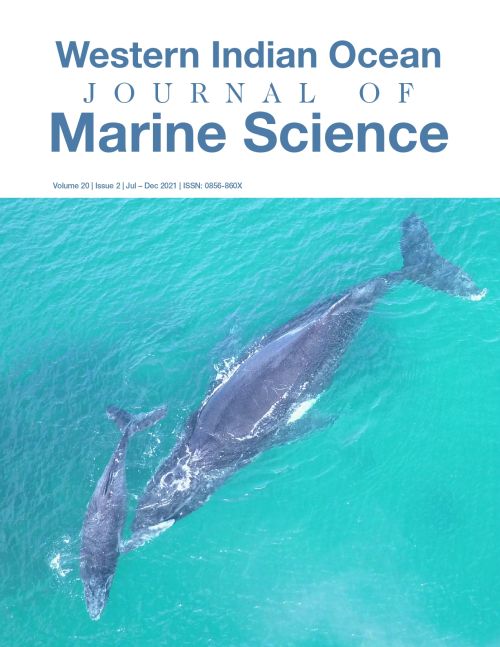
Ratsimbazafindranahaka, M. N., Razafimahatratra, E., Mathevet, R., Adam, O., Huetz, C., Charrier, I., & Saloma, A. (2021). Morphometric study of humpback whale mother-calf pairs in the Sainte Marie channel, Madagascar, using a simple drone-based photogrammetric method. Western Indian Ocean Journal of Marine Science, 20(2), 95-107.
Abstract. Morphometric studies of humpback whales (Megaptera novaeangliae) occurring in the Indian Ocean area have been limited by the technology currently available. In the Sainte Marie channel, Madagascar, straightforward aerial single-camera photogrammetry was tested on mother-calf pairs that combines standard Unoccupied Aerial Vehicle (UAV) with free, easy-to-access, and user-friendly software. The goals of the study were to estimate mother and calf body measurements and to investigate the effect of maternal parity (primiparous versus multiparous, based on length) on calf size. A mean length of 12.4±1.2 m for mothers (N = 16) and 5±0.9 m for calves (N = 16) was estimated. The size of calves did not depend significantly on maternal parity. The photogrammetry method used was simple and cost-effective, yet produced convincing morphometric measurements with acceptable precision and accuracy. The coefficients of variation (CVs) of repeated estimates and the level of error were relatively low (CV = 2.31 % for a known-sized object and average CV = 2.52 % for individual whales; average error = 1.8 % for a known-sized object). These results will encourage more teams to study the morphometry of large marine mammals despite limitations in terms of resources.
Famintinana. Voafetra araka izay fahafahana nisy hatrizay ny fandalinana ara-drefin’ny trozona be trafo (Megaptera novaeangliae) hita any amin’ny faritry ny Ranomasimbe Indianina. Mba ho fanamorana izany dia natao ny fanandramana fomba fandrefesana tsotra amin’ny alalan’ny sary tokana azo an’habakabaka izay miantehitra amin’ny fampiasana fiaramanidina tsy misy mpanamory tsotra (drona) miaraka amin’ny rindrambaiko maimaim-poana, mora azo, sy mora ampiasaina. Renitrozona miaraka amin’ny zanany tao amin’ny lakandranon’ny Nosy Boraha, Madagasikara, no nanatanterahina izany. Ny tanjona tanatin’ny andrana dia ny hanombana ny refin’ireo renitrozona sy ny zanany ary handinika ny fiantraikan’ny fananan’anaka tany aloha amin’ny haben’ny zanaka aty aoriana. Voatombana ho 12,4 ± 1,2 m ny halavan’ny renitrozona (N = 16) ary 5 ± 0,9 m ny an’ny zanany (N = 16). Tsy dia niankina firy tamin’ny fananan’ireo reniny anaka taloha na tsia ny haben’ny zanany hita miaraka aminy. Tsapa fa tsotra sy tsy lafo ny fomba fandrefesana nampiasaina, nefa nahavokatra refy azo antoka sy azo lazaina ho marina. Ambany ny tahan’ny fiovaovan’ireo tombana (CV) rehefa naverimberina ny fandrefesana, ary ambany ihany koa ny tahan’ny hadisoana (CV = 2,31 % rehefa natao andrana tamin-javatra izay fantatra ny refiny ary CV = 2,52 % amin’ny ankapobeny raha nandramana tamin’ireo trozona; salan’isan’ny tahan’ny hadisoana = 1,8 % rehefa natao andrana tamin-javatra izay fantatra ny refiny). Ireo vokatra ireo dia inoana fa hanampy handrisika ekipa maro kokoa handalina ny hai-refin’ireo biby mampinono lehibe an-dranomasina na dia eo aza ny tsy fahampian’ny fahafaha-manao.